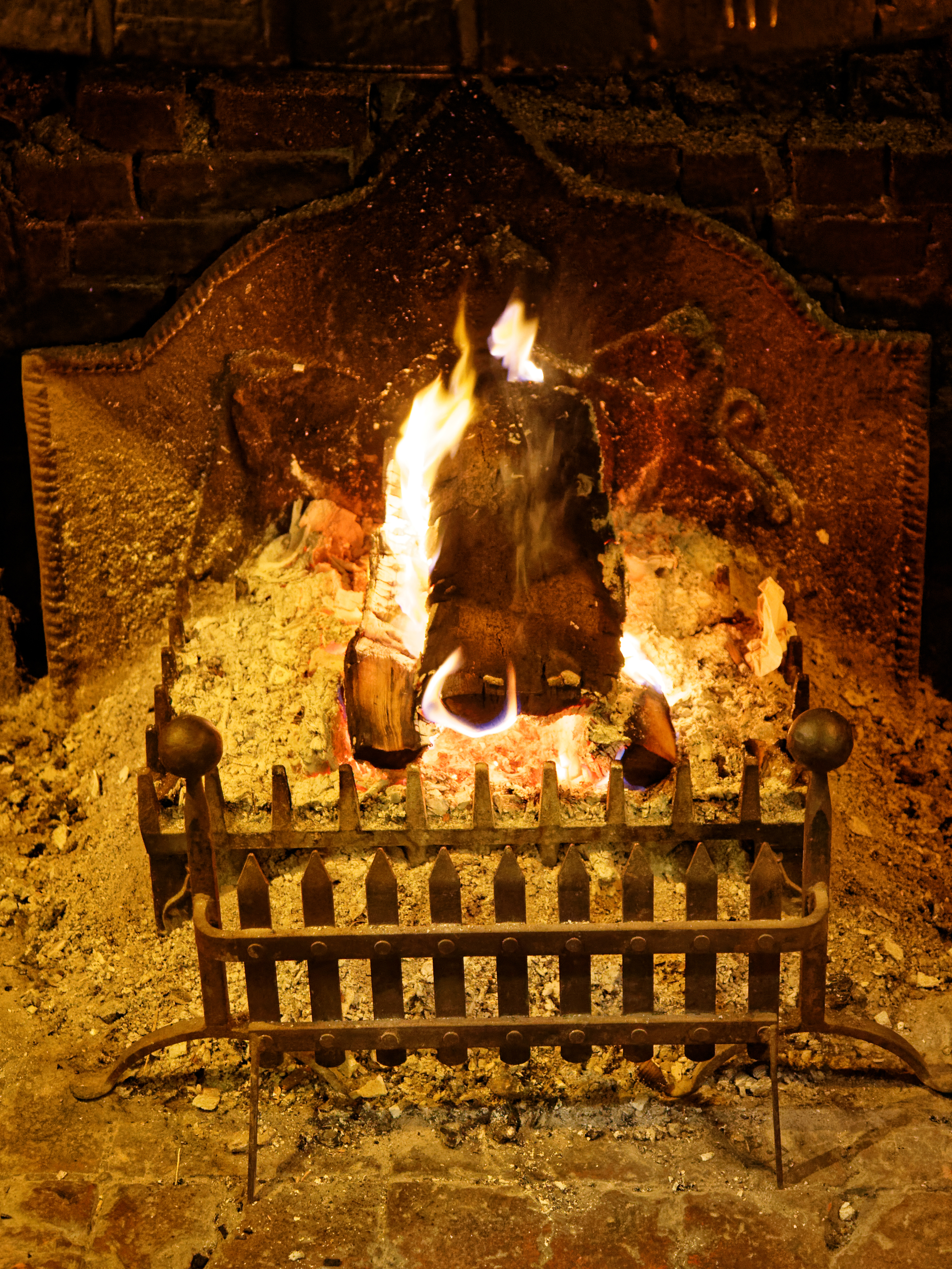
For the earliest dwellings in what is now Canada, the open fire was the house. A single hearth gave heat, light, and a place to cook, and the room that held it was the room where the household lived during the cold months. Everything else in the building arranged itself around that fixed point of warmth.
Why the open fire sat at the centre
An open fire is generous and wasteful at the same time. It throws warmth and light directly into the room in front of it, but a large share of its heat rises straight up the chimney and is lost. In a mild place that trade is tolerable. In a Canadian winter, where cold can settle in for months, it meant a household often warmed one side of the body while the other stayed cold, and the far corners of a room remained chilly.
Because the fire could not be moved, the floor plan followed it. Sleeping spaces were kept close to the chimney mass, which held some warmth after the fire died down, and doors and windows were kept few and small on the side that faced the prevailing wind.
The chimney as a piece of structure
A working chimney is more than a flue. The masonry around it stores heat during the evening and releases it slowly overnight, so a central chimney could steady the temperature of the rooms beside it. In many early homes the chimney was the heaviest and most carefully built part of the house, and its position effectively decided where every other room would go.
Worth noting
Because the open fire was also the cooking fire, the kitchen and the warmest room were often the same room. Daily life in winter concentrated there, and the rest of the house could stay cold for long stretches.
The limits that pushed change
Three problems with the open hearth came up again and again. It used a great deal of wood for the heat it actually delivered into the room. It needed steady attention, since an unbanked fire would burn down and have to be revived. And it carried real risk: sparks, an overheated flue, or a chimney fire were constant concerns in a timber building.
- Fuel. Long winters meant large quantities of cut and dried wood had to be ready before the cold arrived.
- Attention. Someone had to tend and bank the fire, and rise early to bring it back to life.
- Heat loss. Most of the fire's energy went up the chimney rather than into the room.
These limits set the stage for the enclosed stove, which kept the fire behind iron walls and let far more of its heat reach the room. That shift is the subject of the next article.
The open hearth defined the early home: one fire, one warm room, and a house planned around the chimney.
For broader background on early settlement housing and daily life in Canada, the publicly available reference works listed below give useful context.
Continue reading